Key Benefits of Selecting High-Density Polyethylene Geogrid
Release time:2026-01-09 Click:31
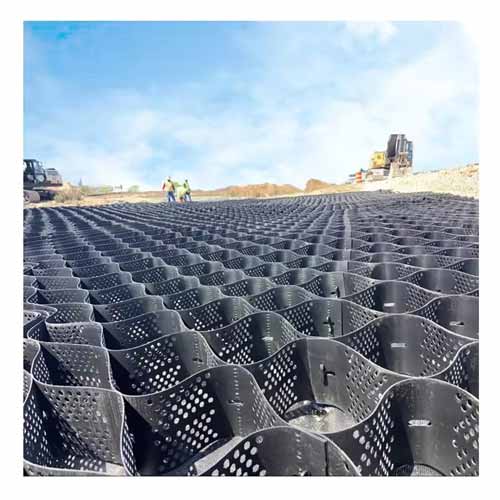
The selection of high-density polyethylene geogrid for soil reinforcement applications provides significant advantages in durability, installation efficiency, and long-term performance that make this material the preferred choice for modern geotechnical engineering projects. Geogrids serve as reinforcing elements within soil structures, providing tensile strength that enables construction of retaining walls, steep slopes, and pavement systems that would be unstable with unreinforced soil. High-density polyethylene, with its combination of chemical resistance, durability, and manufacturing flexibility, offers properties ideally suited to the demanding conditions of geotechnical applications. Understanding the key benefits of selecting high-density polyethylene geogrid enables engineers and project owners to leverage this advanced material technology for improved project outcomes.
The durability characteristics of high-density polyethylene geogrid provide the foundation for long-term performance in demanding geotechnical applications where exposure to moisture, temperature extremes, and chemical agents can degrade less durable materials. HDPE exhibits excellent resistance to the chemical environments encountered in soil, including acids, alkalis, and salts that can attack other polymer materials. The material maintains its mechanical properties over a wide temperature range, from frozen arctic conditions to tropical heat, enabling reliable performance in diverse climate zones. UV stabilization additives protect geogrid exposed during installation from solar degradation, while the material's inherent chemical resistance prevents deterioration from soil chemicals throughout the design service life. This durability ensures that HDPE geogrid maintains its reinforcing function throughout the extended service life expected for geotechnical structures.
The installation efficiency of high-density polyethylene geogrid contributes significantly to reduced construction costs and schedules for reinforced soil projects. The lightweight nature of HDPE geogrid, typically a fraction of the weight of comparable geogrid materials, enables manual handling and placement without the mechanical equipment required for heavier materials. The flexibility of HDPE geogrid allows it to be rolled out smoothly over prepared subgrades, conforming to surface contours without the wrinkles and folds that can create stress concentrations in stiffer materials. The material can be cut to size using conventional tools, enabling rapid adaptation to project requirements without specialized equipment or procedures. These installation advantages reduce labor requirements and accelerate construction progress for reinforced soil projects.
The mechanical performance characteristics of high-density polyethylene geogrid provide the tensile strength and long-term load retention required for effective soil reinforcement. The manufacturing process creates a regular grid structure with defined aperture sizes that provide excellent interlock with surrounding soil particles, transferring loads efficiently between soil and reinforcement. The ultimate tensile strength of HDPE geogrid can be specified across a wide range to match application requirements, from moderate reinforcement for paved surfaces to high-capacity systems for high retaining walls. Creep behavior, the gradual elongation under sustained load, is well-characterized for HDPE geogrid and can be accounted for in design procedures to ensure long-term performance. The combination of strength, stiffness, and creep resistance provides reliable soil reinforcement throughout the design service life of reinforced structures.
The versatility of high-density polyethylene geogrid enables application across a wide range of geotechnical projects where soil reinforcement provides construction or performance advantages. Retaining wall applications utilize geogrid to construct stable earth retention systems that reduce or eliminate the need for concrete or masonry wall construction. Steep slope applications enable construction of slope inclinations that would be unstable with unreinforced soil, maximizing land use in constrained sites. Pavement reinforcement applications use geogrid to distribute traffic loads over wider areas, reducing pavement thickness requirements and extending pavement service life. Railway applications provide track subgrade stabilization that reduces maintenance requirements and extends track service life. This versatility demonstrates the broad applicability of HDPE geogrid for modern geotechnical engineering challenges.
The sustainability characteristics of high-density polyethylene geogrid support environmentally responsible construction practices that are increasingly important for infrastructure projects. HDPE is highly recyclable, with geogrid products potentially incorporating recycled content and being recyclable at end of service life. The extended service life of HDPE geogrid-reinforced structures reduces the need for reconstruction and associated material consumption over the lifecycle of infrastructure. Reduced transportation requirements resulting from lightweight geogrid products lower fuel consumption and associated emissions during construction. These sustainability characteristics align with green building certification requirements and environmental stewardship priorities that influence modern infrastructure development. The combination of technical performance and environmental benefits makes HDPE geogrid an excellent choice for sustainable geotechnical construction.
Previous article:Your Blueprint for Slope Stabilization: Erosion Control Fiberglass Geogrid
Next article:Geotechnical Stability Enhancement and Erosion Control with Geocell
Hot products
Mobile: +86 15097722953
Email:metalproducts2021@163.com
Email:1755383270@qq.com