Benefits of Railway Construction Geogrid in Modern Railways
Release time:2026-01-14 Click:28
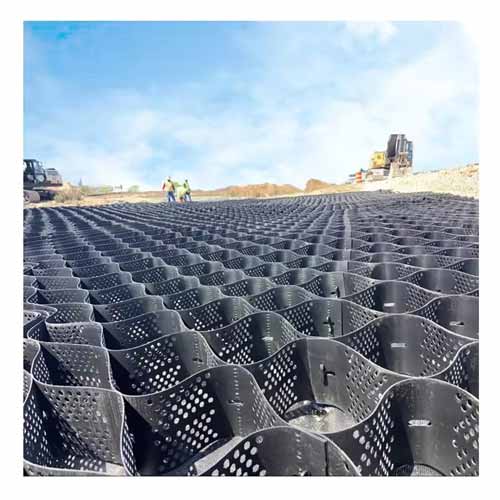
Geogrids, polymeric grid-like structures, have become an indispensable geosynthetic material in modern railway construction, delivering substantial engineering benefits that enhance performance, longevity, and cost-efficiency. Their primary function is reinforcement. When placed within the ballast and sub-ballast layers (the crushed stone foundation of a track), geogrids interlock with the aggregate particles. This mechanical interaction creates a reinforced composite material that distributes dynamic loads from passing trains over a wider area. This significantly reduces vertical and lateral deformation of the track bed, mitigating issues like ballast pocket formation, track settlement, and lateral spreading—especially critical for high-speed lines and heavy-haul freight corridors where track geometry must remain precise.
The stabilization effect of geogrids leads directly to reduced maintenance requirements and extended maintenance cycles. By confining the ballast and limiting its movement, geogrids reduce the rate of ballast degradation (breakdown and fouling). This preserves the drainage and load-bearing properties of the ballast for much longer periods. Consequently, the need for frequent, expensive, and disruptive track maintenance activities—such as ballast tamping, lining, and undercutting—is dramatically decreased. This translates to lower lifetime costs, increased network availability for train operations, and enhanced safety by providing a more stable and predictable track structure.
In challenging ground conditions, geogrids are particularly beneficial. When constructing new railways over soft subgrades (e.g., clay, peat, or silt), geogrids provide the tensile strength that these soils lack. They act as a stabilizing mattress, allowing for reduced thickness of imported fill material and accelerating the construction timeline by improving the bearing capacity of weak soils immediately. This also minimizes differential settlement along the track. For embankments and cuttings, geogrids reinforce slopes, improving their stability and allowing for steeper angles, which reduces the land take and earthworks volume required for the railway corridor.
Beyond reinforcement, geogrids contribute to overall project sustainability. Their use can lead to a reduction in the volume of high-quality quarried aggregate needed, as the reinforced section performs as well as or better than a thicker, unreinforced layer. This conserves natural resources. The extended service life and reduced maintenance frequency also lower the carbon footprint associated with ongoing track upkeep and material transport. As modern railways push for higher speeds, heavier loads, and greater reliability, the integration of geogrids into the track foundation is a proven, value-engineering solution that ensures a more robust, durable, and economical rail infrastructure.
Previous article:Geogrid Mesh Installation Best Practices for Maximum Efficiency
Next article:Containing Fluids with Geomembrane
Hot products
Mobile: +86 15097722953
Email:metalproducts2021@163.com
Email:1755383270@qq.com