Warp-Knitted Polyester Geogrid: The Preferred Choice for Soil Stabilization
Release time:2026-01-31 Click:20
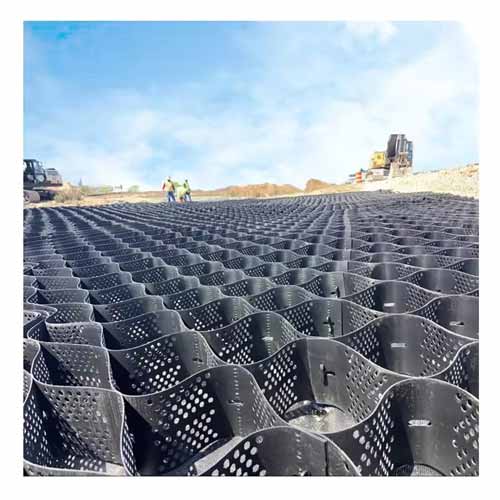
Warp-knitted polyester geogrid has emerged as the preferred soil stabilization solution for civil engineering projects ranging from highway construction and railroad embankments to retaining wall reinforcement and landfill caps. These high-strength geosynthetic materials provide tensile reinforcement that improves the structural performance of soil masses, enabling construction of stable slopes, reinforced retaining structures, and stabilized roadbeds that outperform unreinforced alternatives. The warp-knitting manufacturing process creates geogrids with superior junction strength, dimensional stability, and long-term durability compared to other geosynthetic products, making them the preferred choice for engineers seeking reliable, cost-effective soil stabilization solutions. Understanding the features and engineering properties of warp-knitted polyester geogrid helps civil engineers, contractors, and project owners make informed decisions about soil reinforcement applications.
The manufacturing process and material properties of warp-knitted polyester geogrid produce high-strength, dimensionally stable reinforcement products suitable for demanding civil engineering applications. The warp-knitting process uses oriented polyester yarns mechanically joined through knitting and coating processes that create integral grid structures with high junction strength and minimal creep under sustained loading. Polyester fibers provide high tensile strength, low creep characteristics, and excellent chemical resistance that ensures long-term performance in soil burial environments. Coating formulations, typically PVC or bitumen-based, protect the yarns from installation damage, UV exposure during storage, and chemical attack from soil chemicals. Aperture sizes, tensile strengths, and roll dimensions are specified according to project requirements, with typical tensile strengths ranging from 20kN/m to 400kN/m and roll widths from 1m to 6m depending on application and installation equipment.
The applications and engineering benefits of warp-knitted polyester geogrid in soil stabilization provide significant advantages over conventional construction methods and alternative reinforcement products. Road and highway construction benefits from geogrid reinforcement that reduces aggregate thickness requirements, controls subgrade settlement, and extends pavement service life by distributing traffic loads over wider areas. Retaining wall and steep slope construction leverages geogrid reinforcement to create stable earth structures that would be impractical or uneconomical with conventional construction methods. Railway embankment stabilization prevents differential settlement and provides long-term track support that reduces maintenance requirements and extends the service life of railroad infrastructure. When properly designed according to established geotechnical engineering principles and installed according to manufacturer recommendations, warp-knitted polyester geogrid provides reliable, cost-effective soil reinforcement that enables construction of durable, stable infrastructure throughout the world.
Previous article:Erosion Control Reinvented: The Power of Geobag
Next article:Structural Fiberglass Geogrid
Hot products
Mobile: +86 15097722953
Email:metalproducts2021@163.com
Email:1755383270@qq.com