Applications in Retaining Walls: High-Density Polyethylene Geogrid
Release time:2026-02-05 Click:17
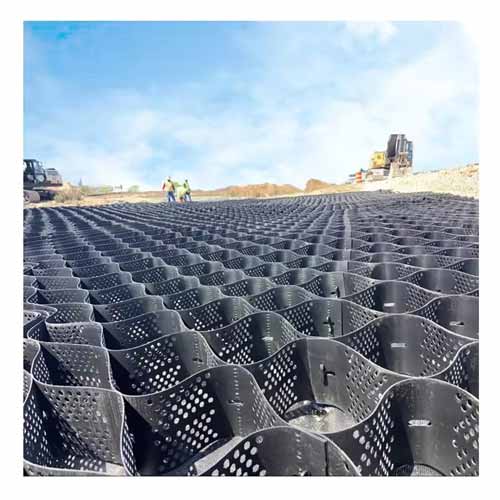
High-density polyethylene (HDPE) geogrid transforms retaining wall performance by reinforcing soil stability, making it indispensable in slope stabilization and wall construction. The geogrid’s grid-like structure interlocks with backfill soil, distributing lateral earth pressures evenly and preventing differential settlement. This reduces the risk of wall bulging or collapse, especially in tall or steep retaining walls where soil stress is high.
In practice, HDPE geogrid is layered within the soil behind the wall. Each layer is anchored to the wall face, creating a cohesive “composite” structure that enhances tensile strength. For walls with poor soil conditions (e.g., clay or sand), the geogrid improves load-bearing capacity, allowing the use of lighter wall materials like segmental blocks or gabions. It also controls erosion by stabilizing the soil, preventing fines from washing out through drainage systems.
The geogrid’s flexibility adapts to ground movement, a key advantage over rigid reinforcements. It accommodates minor settlements or seismic activity without cracking, maintaining wall integrity. Additionally, HDPE’s resistance to chemicals and biological degradation ensures long-term performance, even in soils with high acidity or contamination. Installation is straightforward, with rolls cut to size and overlapped to create a continuous reinforcement layer.
From highway embankments to residential hillside walls, HDPE geogrid proves its value. It enables safer, more durable retaining structures while reducing material costs and construction time, making it a cornerstone of modern geotechnical engineering.
Previous article:Optimizing Water Management and Soil Stability with a Drainage Board
Next article:Soil Stabilization and Erosion Control Using Geomat
Hot products
Mobile: +86 15097722953
Email:metalproducts2021@163.com
Email:1755383270@qq.com