High-Tensile Geogrid Rolls for Road Construction
Release time:2026-02-08 Click:13
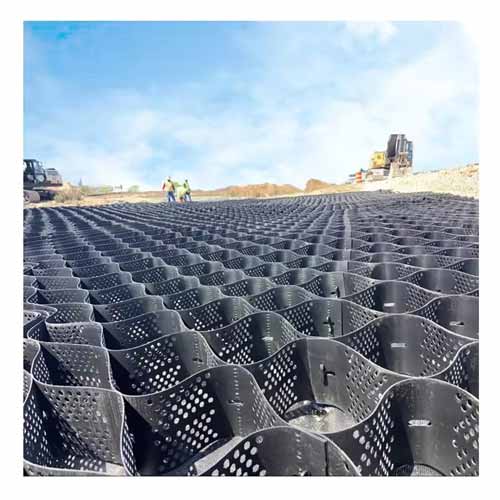
The foundation of any durable infrastructure project, from highways to retaining walls, relies heavily on the stability of the underlying soil. Geogrid rolls have revolutionized civil engineering by providing a cost-effective method to reinforce soil, preventing rutting and settlement under heavy loads. These geosynthetics are typically made from polypropylene or polyester, formed into a grid-like structure that interlocks with aggregate particles. When placed within the soil matrix, the geogrid creates a mechanical interlock that distributes loads over a wider area, significantly increasing the bearing capacity of the subgrade. This allows for the construction of roads on soft soils that would otherwise require expensive excavation and replacement.
The application of geogrid rolls in road construction is a multi-layered process designed to maximize structural integrity. Typically, the geogrid is unrolled perpendicular to the direction of traffic and placed at the interface between the subgrade and the base course. The apertures of the grid are filled with crushed stone or gravel, which locks into the ribs of the geogrid, creating a "mattress" effect that confines lateral movement. This confinement reduces the vertical stress on the subgrade, minimizing deformation and extending the pavement's lifespan. In railway tracks, geogrids are used to stabilize the ballast, preventing the migration of stones and maintaining the track geometry, which reduces maintenance frequency and costs.
One of the most significant advantages of using geogrid rolls is their ability to enhance the performance of unpaved roads and working platforms. In construction sites, military operations, or agricultural areas where paved surfaces are not feasible, geogrids provide a stable driving surface by reinforcing the top layer of soil or gravel. This prevents vehicles from sinking into mud during wet weather and reduces dust generation during dry periods. The flexibility of the rolls allows them to conform to uneven terrain, making them ideal for steep slopes and embankments. Furthermore, their resistance to biological degradation and chemical attack ensures that they perform reliably in diverse environmental conditions, from arctic tundra to tropical wetlands.
From an environmental and economic standpoint, geogrid rolls offer substantial benefits. By reducing the thickness of the aggregate base required for a given load-bearing capacity, they lower the demand for quarried stone, preserving natural resources and reducing the carbon footprint associated with transportation. The use of geogrids also minimizes the need for imported fill material, as local on-site soils can often be stabilized sufficiently for use. This not only reduces construction costs but also accelerates project timelines, as the logistics of material sourcing and hauling are simplified. The long-term durability of high-density polyethylene (HDPE) geogrids means that once installed, they require no maintenance and do not degrade over the design life of the structure.
Innovative designs of geogrid rolls now incorporate features for erosion control and vegetation support. Some geogrids are coated with a biodegradable adhesive or have a textured surface to hold soil and seeds, facilitating the growth of vegetation on slopes. This "green" reinforcement not only stabilizes the surface against rainfall but also integrates the infrastructure into the natural landscape, improving aesthetics and providing habitat restoration. As urbanization increases and land becomes scarcer, the ability to build on marginal soils using geogrid reinforcement is becoming an essential tool for sustainable development, allowing engineers to create safe, stable foundations without extensive earthworks.
Previous article:High-Durability UV-Resistant Outdoor Geogrid for Road Construction
Next article:Superior Containment Solutions Using a Durable Geomembrane
Hot products
Mobile: +86 15097722953
Email:metalproducts2021@163.com
Email:1755383270@qq.com