The Skeleton of Your Roadway: A Strong Roadbed Geogrid
Release time:2026-02-11 Click:15
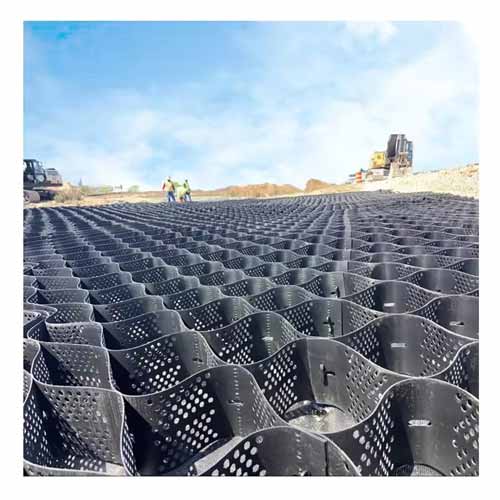
The durability and longevity of roadways depend heavily on the stability of the soil beneath them. Weak or unstable subgrades can lead to potholes, rutting, and premature pavement failure. Roadbed geogrid serves as the skeleton of a road, providing a strong, reinforcing layer that stabilizes the soil and distributes loads, fundamentally enhancing the structural integrity of the roadway.
The primary function of a geogrid in a roadbed is reinforcement. When placed within the aggregate base or subgrade, the geogrid acts as a tension membrane. It locks the aggregate particles together, creating a stiff, interlocked mattress that distributes concentrated loads over a wider area. This confinement prevents the lateral movement of soil and aggregate, which is the primary cause of ruts and deformations in flexible pavements, thereby maintaining the road's profile.
Load-bearing capacity is significantly improved through the use of geogrids. By stabilizing the foundation, the geogrid allows the road to support heavier traffic loads without excessive settlement. This is particularly important for industrial roads, logging roads, and haul roads that experience heavy axle loads. The improved structural support reduces the thickness of aggregate required, which can lower construction costs and optimize the use of available materials.
Geogrids offer superior resistance to environmental degradation. Made from high-density polyethylene (HDPE) or polypropylene, they are resistant to the chemical attack found in soils and are unaffected by UV rays when buried. Unlike natural geotextiles that can degrade biologically over time, geogrids maintain their tensile strength for decades. This long-term durability ensures that the roadbed remains stable throughout the design life of the pavement, delaying the need for rehabilitation.
Construction efficiency is another notable benefit. Installing geogrid is relatively simple and fast compared to other ground improvement methods like deep compaction or soil replacement. The geogrids are typically rolled out over the prepared subgrade, and then covered with aggregate. This speed of construction accelerates project timelines and reduces traffic disruption during roadworks. Furthermore, it allows for the use of lower-quality local fill material in some cases, as the geogrid compensates for the weaker soil.
In conclusion, a strong roadbed geogrid is an essential component of modern pavement design. It acts as the structural skeleton, providing the tensile strength and stabilization that soil alone cannot provide. By incorporating geogrids into the roadbed, engineers and contractors ensure a more robust, longer-lasting road that requires less maintenance and offers a higher return on investment over its service life.
Previous article:Advanced UV-Resistant Outdoor Geogrid with Superior Tensile Strength
Next article:Benefits of Polypropylene Sheet
Hot products
Mobile: +86 15097722953
Email:metalproducts2021@163.com
Email:1755383270@qq.com