Geogrid Solutions for Long-Term Slope Reinforcement Applications
Release time:2026-02-12 Click:16
Slopes—whether in road embankments, landfills, or hillside developments—are inherently prone to erosion, settlement, and landslides, threatening infrastructure and lives. Geogrid solutions have emerged as a transformative technology for long-term slope reinforcement, using high-strength polymer meshes to stabilize soil, distribute loads, and promote vegetation growth, ensuring stability for decades.
Geogrid composition and function are rooted in material science. Made from polypropylene (PP) or polyester (PET), geogrids feature a grid-like structure with apertures ranging from 20 mm to 200 mm. These apertures interlock with soil particles, creating a composite system where the geogrid confines and reinforces the soil, preventing lateral spreading and reducing settlement. The polymer’s high tensile strength (up to 200 kN/m) and resistance to UV degradation and chemical attack ensure long-term performance in harsh environments.
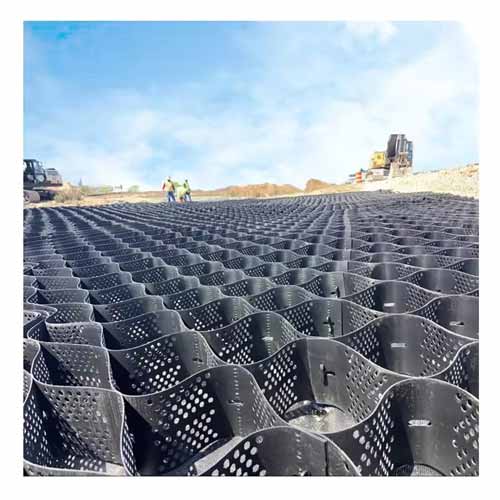
Installation techniques maximize effectiveness. Geogrids are laid in horizontal layers within the slope, with each layer offset to stagger joints and enhance interlocking. They are anchored to the slope face using stakes, nails, or concrete deadmen, and covered with select fill material (e.g., gravel or sandy soil) to facilitate drainage and root penetration. For steep slopes (>45°), multiple layers or combined use with geocells (three-dimensional honeycomb structures) provide additional stability.
Vegetation integration boosts sustainability. When used in conjunction with topsoil and grass seed, geogrids act as a scaffold for plant roots, which further reinforce the slope by binding soil particles. This “green” approach reduces surface erosion, improves aesthetics, and promotes biodiversity, making it ideal for environmentally sensitive areas like highway corridors or parklands. The geogrid’s permeability allows water to infiltrate, nourishing plants while preventing hydrostatic pressure buildup.
Long-term performance is backed by testing. Accelerated aging tests simulate decades of UV exposure, temperature swings, and chemical exposure, confirming geogrids retain 80–90% of their strength over 50 years. Field monitoring of installed slopes shows minimal deformation, even in regions with heavy rainfall or seismic activity. Maintenance is minimal—occasional inspection for damage or vegetation health ensures continued effectiveness.
Geogrid solutions redefine slope reinforcement by combining engineering precision with ecological sensitivity. By stabilizing slopes, reducing erosion, and enabling vegetation growth, they protect infrastructure, preserve landscapes, and provide a sustainable path for development in challenging terrains, proving that smart materials can harmonize human needs with natural resilience.
Previous article:Benefits of Polypropylene Sheet
Next article:The Versatility of Drainage Net in Land Management
Hot products
Mobile: +86 15097722953
Email:metalproducts2021@163.com
Email:1755383270@qq.com