How to Install Railway Construction Geogrid Properly
Release time:2026-02-14 Click:20
Proper installation of railway construction geogrid is essential for stabilizing subgrades, reducing settlement, and extending the lifespan of the track structure. The process begins with thorough site preparation. The ground surface must be cleared of vegetation, topsoil, and large rocks, then leveled and compacted to create a firm foundation. A layer of sub-ballast (typically crushed stone) is then spread and compacted to provide a stable working platform and facilitate drainage. It is crucial that the subgrade is dry and free of standing water, as moisture can compromise the geogrid's interaction with the aggregate. Any soft spots or "pumping" mud must be excavated and replaced with engineered fill.
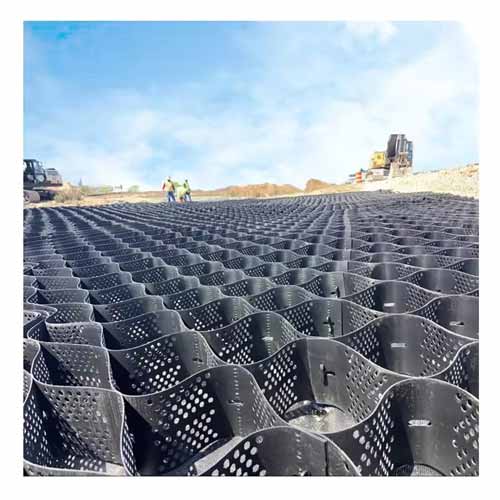
The laying of the geogrid is the most critical phase. The geogrid rolls should be unrolled smoothly along the centerline of the track, ensuring the longitudinal ribs (which carry the primary tensile load) are oriented perpendicular to the track centerline (transverse direction) for maximum confinement. Overlaps between adjacent rolls must be at least 300mm to 600mm (depending on the design specification) and secured with U-nails or connecting pins to prevent separation during backfilling. The geogrid should not be stretched too tightly; it needs to remain "wrinkle-free" but with enough slack to conform to the uneven surface of the sub-ballast without tearing. Avoid dragging the grid over sharp edges or rough surfaces, as this can damage the polymer coating or the ribs.
Backfilling and compaction require specific techniques to protect the geogrid. The first lift of ballast or aggregate is placed directly over the geogrid using a dozer or low-impact spreader to avoid puncturing the grid. Compaction should start from the edges and move inward, using smooth-drum vibratory rollers. The compaction energy must be controlled; excessive vibration or heavy static loads can damage the geogrid structure. Once the first layer is compacted, subsequent lifts can be placed normally. The geogrid effectively creates a "raft" effect, distributing the load of the trains and ballast over a wider area, preventing the subgrade soil from mixing with the ballast and reducing differential settlement. Quality control tests, such as pull-out tests, should be conducted to verify the installation integrity before the main track construction begins.
Previous article:The Versatility of Drainage Net in Land Management
Next article:The Essential Role of Geogrids in Modern Construction
Hot products
Mobile: +86 15097722953
Email:metalproducts2021@163.com
Email:1755383270@qq.com