Product details description
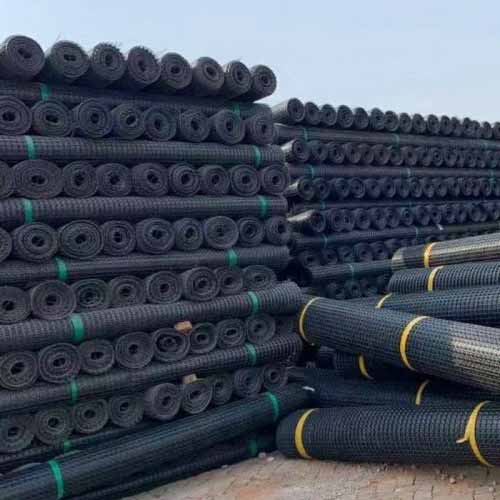
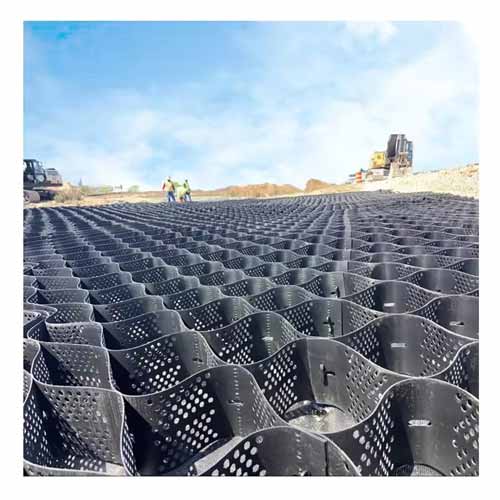
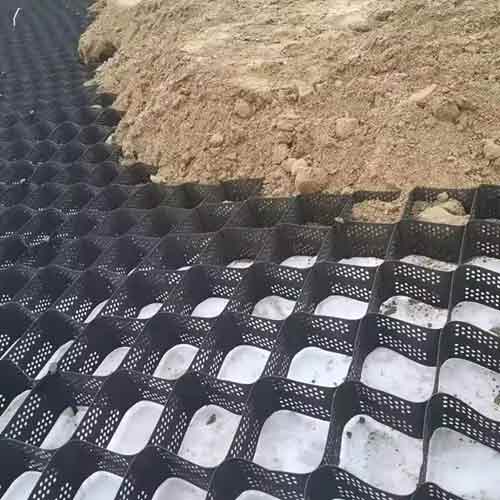
Geogrids are polymeric (plastic) or metallic grids used in civil
engineering to stabilize soil, control erosion, and reinforce slopes. Their
primary function is to distribute loads over a wider area, reducing soil stress
and preventing slope failure. In slope protection applications, geogrids are
placed horizontally between soil layers, creating a "reinforced earth" system
that increases the slope's shear strength. The grid's apertures (openings)
interlock with soil particles, restricting lateral movement and promoting
vegetation growth, which further stabilizes the slope through root
reinforcement. This makes geogrids ideal for highway embankments, riverbanks,
and landfill liners, where traditional riprap (rock) or concrete retaining walls
are cost-prohibitive or environmentally disruptive.
Erosion control is achieved by two mechanisms: surface protection and
subsurface drainage. The geogrid acts as a barrier to prevent soil particles
from being washed away by rain or runoff, while its open structure allows water
to infiltrate, reducing pore water pressure that can cause slope instability.
For steep slopes (>30 degrees), a "facing" (vegetation, riprap, or concrete)
is often applied over the geogrid to protect it from UV degradation and provide
immediate erosion control. The geogrid's tensile strength (typically 20-100
kN/m) resists the downslope force of soil, while its junction efficiency
(strength at the intersection of ribs) ensures the grid maintains integrity
under stress. Biaxial geogrids (equal strength in both directions) are used for
general slope stabilization, while uniaxial geogrids (high strength in one
direction) are designed for retaining walls and steep slopes where load
direction is predictable.
Installation requires proper site preparation: the slope must be graded to
the design angle (typically 1:2 or 1:3), and the soil compacted to a minimum
density (95% Proctor) to ensure good grid-soil interaction. The geogrid is
rolled out horizontally, with overlapping edges (12-24 inches) to transfer loads
between sheets. Anchors (steel pins or stakes) secure the grid to the slope,
preventing displacement during construction. For vegetated slopes, topsoil is
spread over the grid, and seeds or sod are planted; the grid's apertures allow
roots to penetrate, creating a "living" retaining structure. In high-flow areas
(riverbanks), the geogrid is often combined with riprap or gabions to resist
hydraulic forces.
Durability is critical for long-term performance. Polymer geogrids
(polypropylene or polyester) are susceptible to UV degradation, so they must be
covered with soil or a UV-resistant coating. Chemical resistance is also
important; in acidic or alkaline soils, the grid may lose tensile strength over
time, so testing for chemical compatibility is essential. Metallic geogrids
(galvanized steel) offer higher durability but are prone to corrosion in saline
environments. Design standards (e.g., AASHTO M288, ISO 10318) specify minimum
tensile strength, junction efficiency, and creep resistance (deformation under
constant load) to ensure the grid retains 80% of its strength after 100 years of
service.
Environmental benefits include reduced excavation (no need for large
retaining walls) and promotion of vegetation, which enhances biodiversity and
aesthetics. Geogrids also reduce the carbon footprint of construction by using
less concrete and steel. For example, a geogrid-reinforced slope uses 50% less
material than a concrete wall and can be vegetated, blending into the landscape.
In landslide-prone areas, geogrids provide a cost-effective solution to
stabilize slopes without disrupting existing ecosystems. Case studies show that
geogrid-reinforced slopes have a 90% success rate in preventing erosion over 20
years, compared to 60% for unreinforced slopes.
Maintenance involves periodic inspection for surface erosion, grid exposure
(from scouring or animal activity), and vegetation health. If the grid becomes
exposed, it should be covered with additional soil or riprap. Drainage systems
(French drains or toe drains) must be maintained to prevent water buildup behind
the slope. For polymer geogrids, UV exposure should be minimized by ensuring
adequate soil cover (minimum 6 inches). By combining mechanical reinforcement
with natural vegetation, geogrid slope protection provides a sustainable,
long-lasting solution for erosion control and slope stability, adaptable to a
wide range of geological and climatic conditions.
geogrid for road geogrid machine geocell slope Composite geogrid
Previous article:
Innovative Designs in Geogrid Technology for Modern Infrastructure
Next article:
Geogrid Mesh for Landfill Liners & Erosion Control