Product details description
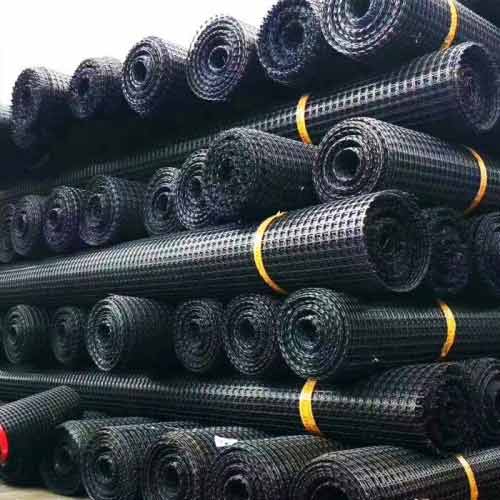
Geogrids are polymeric or metallic grid-like structures used to reinforce
soil, aggregate, and other geomaterials in civil engineering applications. Their
long-term performance is critical for the integrity of structures like retaining
walls, steep slopes, road bases, and foundation soils. This performance hinges
on the material's durability, design compatibility with the soil, and proper
installation.
The primary long-term concern is creep and tensile strength retention.
Geogrids are under constant tensile load for decades. Creep is the tendency of a
polymer to slowly deform under a sustained load. High-quality geogrids are made
from polymers with high molecular weight and are pre-tensioned during
manufacturing to minimize long-term creep. Manufacturers provide creep-reduced
strength values, which are a fraction of the ultimate tensile strength, for
design purposes. This ensures the design accounts for strength loss over a 75-
to 100-year service life. For metallic geogrids (e.g., steel), corrosion
protection (galvanizing, epoxy coating) is the key to long-term strength
retention.
Environmental durability is paramount. Geogrids are exposed to a hostile
environment: soil chemicals, varying pH, microorganisms, and installation
damage. Polymers like polyester (PET), polypropylene (PP), and high-density
polyethylene (HDPE) are selected for their resistance. Polyester offers
excellent creep resistance and strength but can hydrolyze in highly alkaline
environments (pH > 9). Polypropylene and HDPE are highly resistant to
chemical and biological attack but are more susceptible to creep and UV
degradation. Proper specification involves matching the polymer to the site's
specific chemical and pH conditions, and ensuring the product has additives for
UV stabilization if it will be exposed during construction.
Soil-Geogrid Interaction (Interlock) is the mechanism of performance. The
geogrid's apertures interlock with soil particles or aggregate, creating a
composite material with improved shear strength. Long-term performance requires
this interlock to be maintained. If the soil fines migrate or the aggregate
breaks down, the interlock can weaken. Therefore, selecting the correct aperture
size relative to the soil/aggregate gradation is crucial. Additionally, junction
strength—the strength of the points where the ribs cross—must be high to prevent
unraveling under load over time.
Installation integrity directly impacts longevity. Geogrids must be placed
on a prepared,平整 subgrade, free of sharp protrusions. They must be laid flat
under proper tension, with sufficient overlap between rolls as specified.
Backfilling must be done with care to avoid dragging or displacing the grid, and
compaction must be conducted in layers to avoid damaging the material. When all
factors are correctly addressed—appropriate material selection, creep-aware
design, environmental compatibility, and meticulous installation—geogrids
provide a reliable, long-term reinforcement solution that improves stability and
reduces maintenance for earth structures over their entire design life.
geogrid for road geogrid machine geocell slope Composite geogrid
Previous article:
Reinforcing Soil Stability with Uniaxial Geogrid
Next article:
Geogrid Soil Reinforcement: Structural Applications and Benefits