Product details description
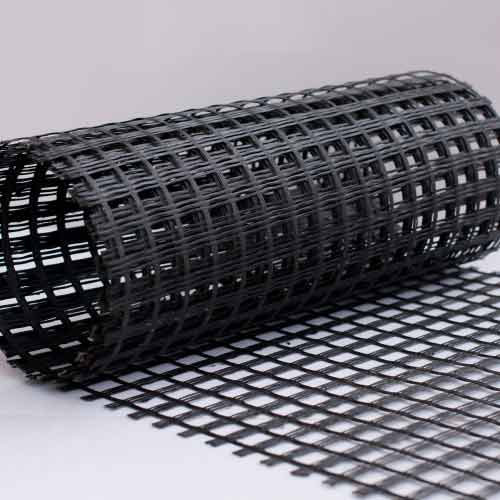
Geogrids are high-strength polymer materials used in soil reinforcement to
improve stability and load-bearing capacity. For infrastructure projects such as
retaining walls, steep slopes, and road bases, the long-term performance of
geogrids is critical. These materials are designed to last for decades, but
their durability is contingent upon proper selection, installation, and
environmental conditions. Understanding the factors that influence their
longevity is essential for engineers and project owners to ensure the continued
safety and effectiveness of the reinforced structure.
One of the primary factors affecting the long-term performance of geogrids
is their resistance to environmental degradation. Geogrids are typically made
from polypropylene, polyester, or polyethylene, each offering different
resistance to chemical exposure and pH levels in the soil. In environments with
highly alkaline or acidic soils, specific polymer types are chosen to prevent
the material from becoming brittle over time. Additionally, the carbon black
additive is crucial for UV resistance; without it, exposure to sunlight during
installation or if the geogrid is near the surface can cause rapid polymer
degradation and loss of tensile strength.
Structural durability is also closely linked to the mechanical interactions
between the geogrid and the surrounding soil. The junction efficiency—the
ability of the geogrid to interlock with the soil particles—is vital for
developing the reinforcement mechanism. Over time, soil settlement or creep can
alter the confining pressure on the ribs of the geogrid. A durable geogrid must
maintain its rib geometry and tensile modulus despite these mechanical stresses.
If the material creeps excessively under constant load, the reinforced structure
may deform, leading to cracks or instability in the pavement or slope it
supports.
Fortunately, maintenance requirements for installed geogrids are generally
minimal, which is one of their primary advantages over traditional materials
like steel. Once buried and compacted, the geogrid functions as a passive
reinforcement element that does not require scheduled inspections or repairs.
However, the long-term performance depends heavily on the quality of the
installation. Ensuring proper cover depth and protecting the geogrid from
mechanical damage during construction are the "maintenance" steps that must be
rigorously followed to prevent future issues.
In conclusion, geogrids offer a robust solution for soil reinforcement with
excellent long-term performance when specified correctly. Their durability is
ensured by selecting materials resistant to chemical and UV degradation and by
verifying their mechanical stability under specific soil conditions. Since they
require virtually no maintenance once installed, they provide a cost-effective
and reliable solution for critical infrastructure. By focusing on proper
material selection and installation practices, engineers can guarantee that the
geogrid will perform its structural function throughout the design life of the
project.
geogrid for road geogrid machine geocell slope Composite geogrid
Previous article:
Geogrid Soil Reinforcement: Structural Applications and Benefits
Next article:
Geogrid Environmental Impact: Sustainable Ground Improvement