Reinforcing Earthworks with High-Strength Road Construction Geogrid
Release time:2026-02-10 Click:13
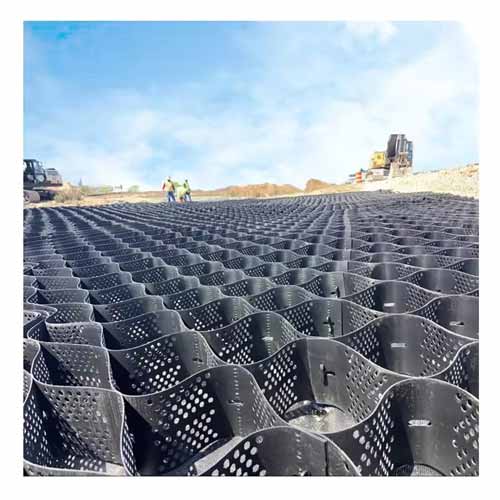
Modern civil engineering has moved beyond simply excavating and replacing soil; it now involves strategically reinforcing it. In roadway, railway, and embankment construction, road construction geogrid is a pivotal geosynthetic material used to strengthen unbound aggregate bases and stabilize weak subgrades. This polymer grid, typically made from polyester, polypropylene, or fiberglass, is placed within soil layers to create a composite material with significantly improved tensile strength and load distribution capabilities.
The primary mechanism is mechanical interlock and confinement. When a geogrid is placed at the interface between the subgrade and the base aggregate (or within the aggregate layer itself), the aggregate particles partially penetrate its apertures. This interaction locks the aggregate in place, preventing lateral spreading under load. This confinement increases the effective stiffness of the entire layered system, allowing it to distribute traffic loads over a wider area of the weak subgrade, thereby reducing rutting and prolonging pavement life.
There are different types of geogrids for various functions. Uniaxial geogrids have high strength in one primary direction and are used for wall and slope reinforcement, such as in mechanically stabilized earth (MSE) retaining walls. Biaxial geogrids have nearly equal strength in both machine and cross directions and are primarily used for base reinforcement under roads and parking lots to restrain aggregate movement in both horizontal directions. The selection depends on the principal stress directions in the application.
The benefits for road construction are substantial. By incorporating a geogrid, engineers can reduce the required thickness of expensive aggregate base material, leading to significant cost savings. It allows for construction over soft, compressible soils that would otherwise be unsuitable, reducing the need for deep excavation and soil replacement. It also minimizes differential settlement and reduces reflective cracking in asphalt pavements by providing a more stable, uniform platform.
Installation is a carefully controlled process. The subgrade is prepared and compacted. The geogrid is rolled out flat, with proper overlap between adjacent rolls as specified by the manufacturer. It is then tensioned slightly and anchored at the edges. The aggregate base material is then placed and compacted directly on top of the geogrid. Care must be taken during aggregate placement to avoid damaging the grid with sharp equipment tires.
Implementing road construction geogrid is a proven method for building more resilient and cost-effective infrastructure. It transforms poor ground into a viable construction platform. By selecting the correct geogrid type, strength, and aperture size for the specific soil and traffic conditions, civil engineers can design roads that are stronger, require less maintenance, and have a longer service life, even under challenging geological conditions, ensuring safer and more durable transportation networks.
Previous article:Reinforcing Slopes with Geogrid Retaining Wall
Next article:Pavement Base Fiberglass Geogrid
Hot products
Mobile: +86 15097722953
Email:metalproducts2021@163.com
Email:1755383270@qq.com