Geogrid Retaining Wall for Infrastructure Projects
Release time:2026-02-24 Click:13
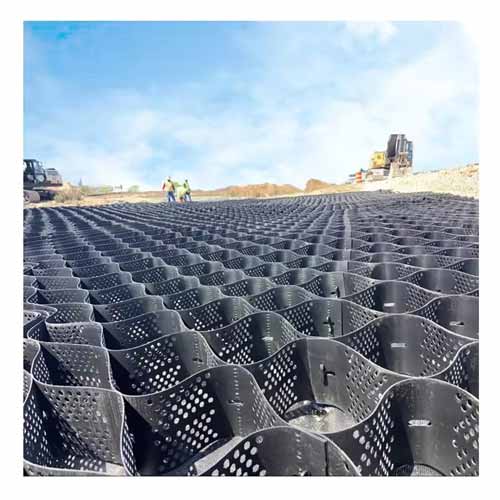
Infrastructure, construction, and landscaping projects often require retaining walls to stabilize soil, prevent erosion, and create level surfaces on sloped terrain. Geogrid retaining walls are a cost-effective, durable solution, using geogrids (synthetic mesh materials) to reinforce soil and enhance the wall’s stability. They are widely used in roads, railways, and residential developments for their reliability and versatility.
A geogrid retaining wall consists of two main components: geogrids and backfill material (typically soil or aggregate). Geogrids are synthetic mesh materials made from polypropylene, polyester, or polyethylene, designed to distribute soil pressure evenly and increase the soil’s shear strength. They are placed in layers within the backfill, extending from the wall face into the retained soil, creating a reinforced soil mass.
The key advantage of geogrid retaining walls is their ability to stabilize soil and prevent erosion. The geogrids interlock with the backfill material, transferring lateral soil pressure to the geogrid layers, which distribute the force evenly. This reduces the risk of wall failure, such as bulging or sliding, even on steep slopes or in areas with poor soil conditions. They are also more flexible than traditional concrete retaining walls, adapting to minor ground movements.
Geogrid retaining walls are cost-effective and easy to install compared to traditional concrete or stone walls. They require less heavy equipment and labor, as the geogrids are lightweight and easy to handle. The backfill material can often be sourced locally, reducing material transportation costs. Additionally, their modular design allows for quick installation, minimizing project downtime.
Geogrid retaining walls are versatile and adaptable to various project needs. They can be designed to handle different heights, soil types, and load requirements—from small residential retaining walls to large-scale infrastructure projects like highway embankments. The geogrids are available in different strengths, mesh sizes, and materials, ensuring compatibility with the project’s specific soil and load conditions.
In conclusion, geogrid retaining walls are a reliable, cost-effective solution for soil retention and erosion control. Their geogrid reinforcement enhances soil stability, preventing wall failure and erosion. Easy to install, versatile, and durable, they meet the demands of diverse infrastructure and construction projects. They offer long-lasting performance, ensuring the safety and stability of sloped terrain for years to come.
Previous article:Lightweight Stretched Geogrid Simplifies Transport and Handling
Next article:Reinforcement Solutions Using Geogrid Rolls for Soil Stabilization and Pavement Construction Applications
Hot products
Mobile: +86 15097722953
Email:metalproducts2021@163.com
Email:1755383270@qq.com