Reinforcement Solutions Using Geogrid Rolls for Soil Stabilization and Pavement Construction Applications
Release time:2026-02-25 Click:18
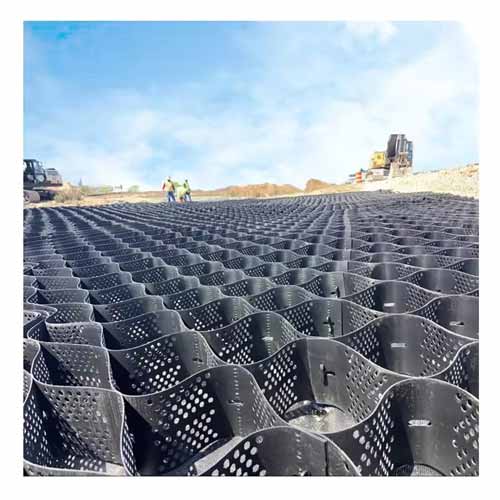
Geogrid rolls have revolutionized soil reinforcement and pavement construction practices by providing high-strength, cost-effective solutions for stabilizing weak soils, reinforcing aggregate layers, and extending the service life of paved surfaces. The fundamental function of geogrids in soil reinforcement involves distributing loads over a wider area, reducing stress on weak subgrade soils and preventing the progressive deformation that leads to pavement failures and surface irregularities. Geogrids are manufactured from high-strength polymers including polyester, polypropylene, or fiberglass, with the material extruded or woven into grid patterns that provide tensile strength in two orthogonal directions. The open grid structure allows aggregate materials to interlock with the geogrid ribs, creating a composite structure that combines the compressive strength of the aggregate with the tensile strength of the geogrid to resist applied loads more effectively than either material alone.
The engineering design of geogrid roll installations requires consideration of soil conditions, traffic loads, and construction practices that influence the performance and effectiveness of soil reinforcement systems. Site investigation to characterize subgrade soil conditions, including soil type, density, moisture content, and bearing capacity, provides the foundation for geogrid specification and design. The selection of geogrid type, including biaxial versus uniaxial products, aperture size, and tensile strength, depends on the expected loading conditions and the reinforcement requirements of the specific application. Design methodologies established by organizations such as the American Association of State Highway and Transportation Officials provide guidance for calculating the number and orientation of geogrid layers, the required overlap at joints, and the appropriate coverage area for specific project conditions. Construction practices including proper subgrade preparation, geogrid deployment and tensioning, and aggregate placement and compaction significantly influence the in-situ performance of geogrid-reinforced systems.
The application range for geogrid rolls spans transportation infrastructure, retaining walls, embankments, and various other civil engineering applications where soil reinforcement provides meaningful performance and economic benefits. Highway and roadway construction represents the largest application for geogrids, where reinforcement of subgrade and base layers reduces the required thickness of aggregate materials, extends pavement service life, and reduces maintenance requirements over the life of the facility. Retaining wall applications utilize geogrids as reinforcement within the wall structure, creating mechanically stabilized earth walls that provide cost-effective alternatives to conventional concrete retaining walls. Embankment construction on soft soils benefits from geogrid reinforcement that prevents slope failure and reduces settlement during and after construction. The proven performance and economic advantages of geogrid roll applications have established soil reinforcement as a standard practice in modern civil engineering, with geogrids serving as essential components in the construction of durable, cost-effective infrastructure.
Previous article:Geogrid Retaining Wall for Infrastructure Projects
Next article:Preventing Waterlogging with Efficient Drainage board
Hot products
Mobile: +86 15097722953
Email:metalproducts2021@163.com
Email:1755383270@qq.com