Product details description
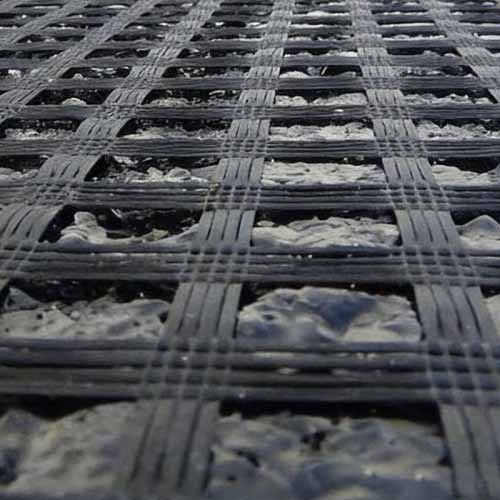
Geogrids are geosynthetic materials used to reinforce soil. They function
by interlocking with soil particles to create a composite material that is
stronger and stiffer than the soil alone.
Mechanism: Interlocking and Confinement
Soil has high compressive strength but low tensile strength. When a load is
applied, soil wants to spread out laterally. A geogrid placed within the soil
layer creates friction against the aggregate particles. This "confinement"
prevents lateral movement, effectively turning the soil into a stiffened
mat.
Types of Geogrids
Uniaxial: High tensile strength in one direction (machine direction). Used
for retaining walls where the force is primarily horizontal.
Biaxial: Equal strength in both directions (machine and cross-machine).
Used for base stabilization under roads and railways to distribute loads over a
wide area.
Applications
Road Construction: Placing a geogrid between the subgrade (native soil) and
the aggregate base prevents the aggregate from sinking into the mud (pumping
action) and reduces rutting. It allows for thinner aggregate layers, saving
material costs.
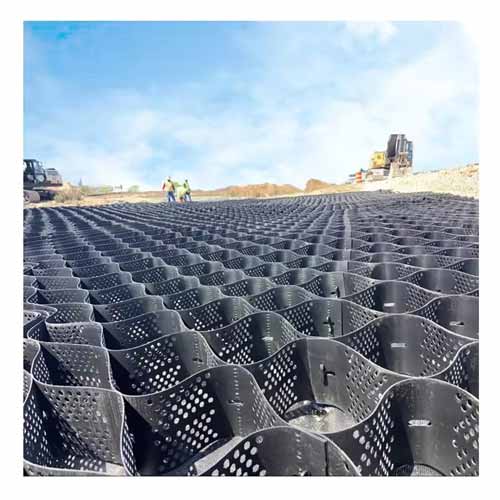
Steep Slopes: Geogrids allow for the construction of near-vertical
retaining walls using wrapped face techniques, saving space compared to concrete
gravity walls.
Soft Ground: Over weak subgrades (swampy areas), geogrids create a "bridge"
effect, spreading the weight of the fill material so the soil underneath doesn't
fail in shear.
Durability
High-quality geogrids are made from high-density polyethylene (HDPE) or
polyester, coated with carbon black to resist UV degradation. They are
chemically inert and resistant to biological degradation (rot), ensuring a
design life of 50-100 years buried underground.
geogrid for road geogrid machine geocell slope Composite geogrid
Previous article:
Cost-Effective Ground Stabilization Solution with Geogrid
Next article:
Environmental Benefits of Using Geogrids in Erosion Control